Decoding the message
While cryptography advanced, cryptanalysis grew alongside it as researchers found ways to decrypt increasingly complex messages. Cryptanalysis is a form of code breaking and refers to the practice of accessing encrypted information without the proper key. One of the earliest major breakthroughs came in the 9th century when Arab polymath Al-Kindi described frequency analysis, a technique that exposed critical weaknesses in both substitution and many transposition methods. This method studies how often certain letters or patterns appear in ordinary language, noting that characters like E and T occur far more often than Z or Q. It also examines recurring pairs such as TH and ER and repeated letters like EE and SS.
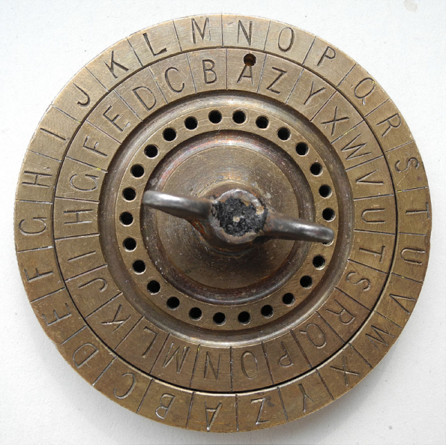
Early forms of cryptography are simple to solve for the most part, which is why nowadays they’re typically seen in entertainment. Ciphers like A1Z26 and Atbash only require the interceptor to know the order of the alphabet, making them easy for beginners. Caesar shifts are a bit more complex, but since there are only 25 possible solutions they can be brute-force decrypted with either patience or a simple decoding wheel. When brute force isn’t used, frequency analysis often exposes the weak points of more complicated encryption methods like the ADFGVX cipher. Transposition ciphers, while harder to spot, are also vulnerable because they preserve letter frequencies and can often be unraveled by reconstructing likely patterns or testing grid arrangements. Their strength also relies on the length of the message, as simple phrases will take less time and energy to brute-force decrypt.