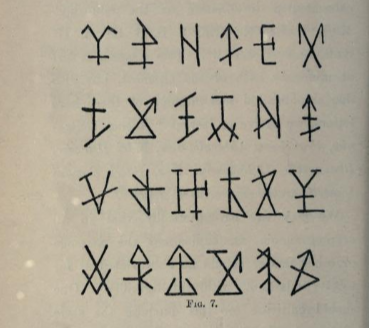
A portion of an angular cipher language

Encrypt it

Cryptography goes back thousands of years. From Ancient Greece to the end of World War II, it was mostly used for military communication. After WWII, its scope was expanded to include protecting business and personal information while evolving technology allowed, and continues to allow, for increasingly complex algorithms.
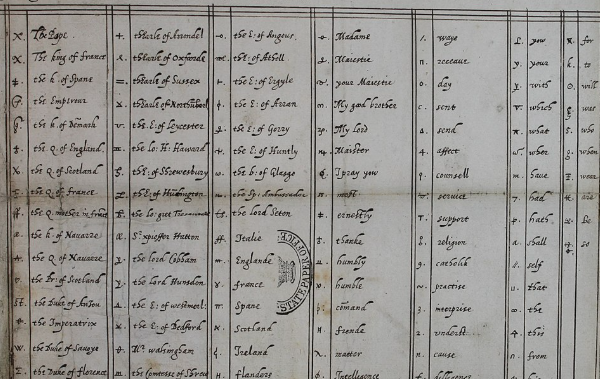
The cipher code of Mary Queen of Scots

Disguise it

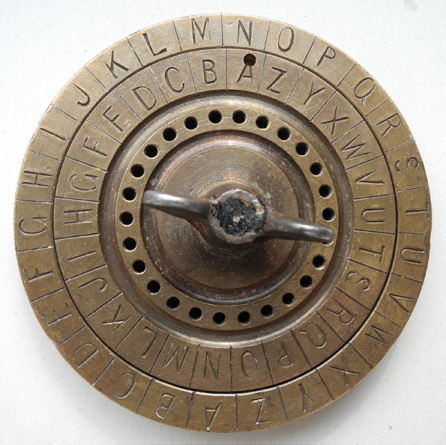
Substitution ciphers replace each character in a message with another character through a defined substitution alphabet. These types of ciphers tend to be easier to solve. Some examples include Caesar ciphers, A1Z26 ciphers, Atbash ciphers, and Pigpen ciphers.

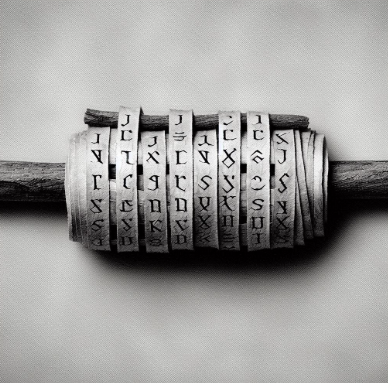
An image of a scytale cipher, where the message is written on fabric wrapped around a piece of wood

Shuffle it

Transposition ciphers, or permutation ciphers, rearrange the order of the characters. These keep the core message intact, unlike substitution ciphers. They also allow for more complex encryption and become safer as the message gets longer. Some examples are scytale ciphers and ADFGVX ciphers.

A decoder wheel with the alphabet written around two independently moving rings

Decrypt it

Cryptanalysis is the art of breaking through these encryption techniques without using a key. It evolves alongside cryptography as finding weak points is necessary for inventing new, safer algorithms. A major breakthrough was frequency analysis, which studies how often certain letters or patterns appear in ordinary language.